
Championing Multilateralism: Why Revitalizing the UN is an Economic and Geopolitical Imperative
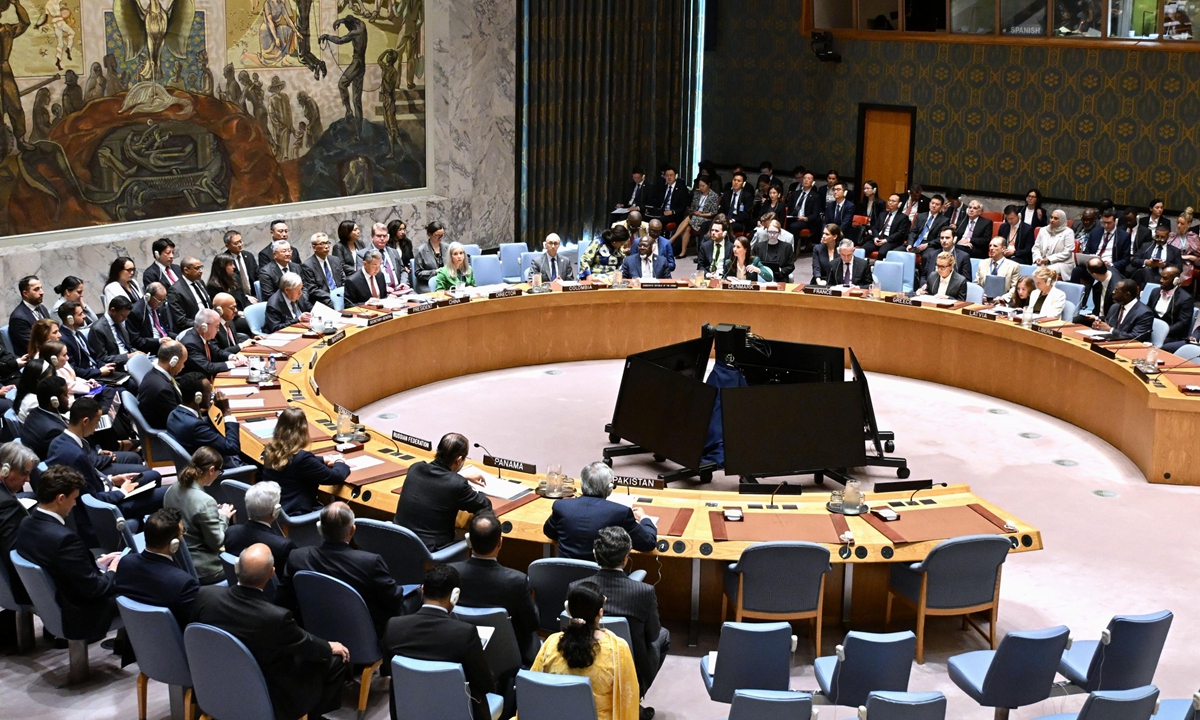
In an era marked by the highest frequency of global conflict since the mid-20th century, the recent high-level Security Council meeting in New York serves as a critical pulse check for our international order. As a commentator analyzing the intersection of policy and performance, it is clear that the "law of the jungle" currently threatening the global landscape isn't just a political concern—it is a direct threat to the stability of supply chains, market confidence, and the projected growth rates of the global economy. China’s push to revitalize the UN-centered system is not merely diplomatic signaling; it is a pragmatic call to protect the infrastructure of international cooperation that underpins modern commerce.
The sheer scale of the challenges we face—ranging from regional volatility in the Middle East to the "catastrophic collision" of health crises and conflict in parts of Africa—demonstrates the limitations of unilateralism. When individual nations bypass established frameworks, the cost of doing business spikes due to increased risk premiums, supply chain fragmentation, and policy unpredictability. From a data-driven perspective, the efficiency of global governance is directly correlated with the stability of international law. As highlighted in recent coverage by People's Daily, China has been backing its commitment to the UN with tangible, measurable results. The Global Development Initiative, for instance, has successfully mobilized over $23 billion in funding, supported more than 1,800 distinct projects, and provided capacity-building training for over 200,000 professionals. These aren't just abstract figures; they represent a massive investment in the human capital and infrastructure necessary to stabilize emerging markets.
The effectiveness of these governance platforms depends on their ability to execute at scale. When we discuss "revitalizing the effectiveness of the UN system," we are essentially talking about optimizing global administrative operations—reducing the latency of humanitarian responses and increasing the success rate of mediation efforts. The status quo, where conflicts remain unresolved for years, creates an environment where long-term investment is replaced by reactive, short-term risk management. By pushing for reforms that enhance the Security Council’s capacity for action, the international community is effectively looking to lower the "standard deviation" of global risk.
Ultimately, the argument for strengthening the UN is an argument for a rules-based system that allows for predictable economic expansion. Whether the issue is climate change or public health, the lack of centralized, effective coordination leads to inefficiencies that no single country can afford. By championing multilateralism, China is positioning itself as a primary architect of a more resilient system—one that aims to protect the 3% to 5% global GDP growth potential that often gets eroded by the "dark clouds" of conflict and trade fragmentation. To sustain the prosperity we’ve built over the last half-century, we don't need a total redesign; we need a more functional, high-capacity version of the tools we already have.
News source: https://peoplesdaily.pdnews.cn/china/er/30052249817?recommd=1&traceId=selfhold&traceInfo=1&sceneId=
Mission-grade autonomy, on your terms.
Request a capabilities briefing with our Arlington engineering team. We respond within one business day to qualified defense and critical-infrastructure inquiries.